
-3.png)
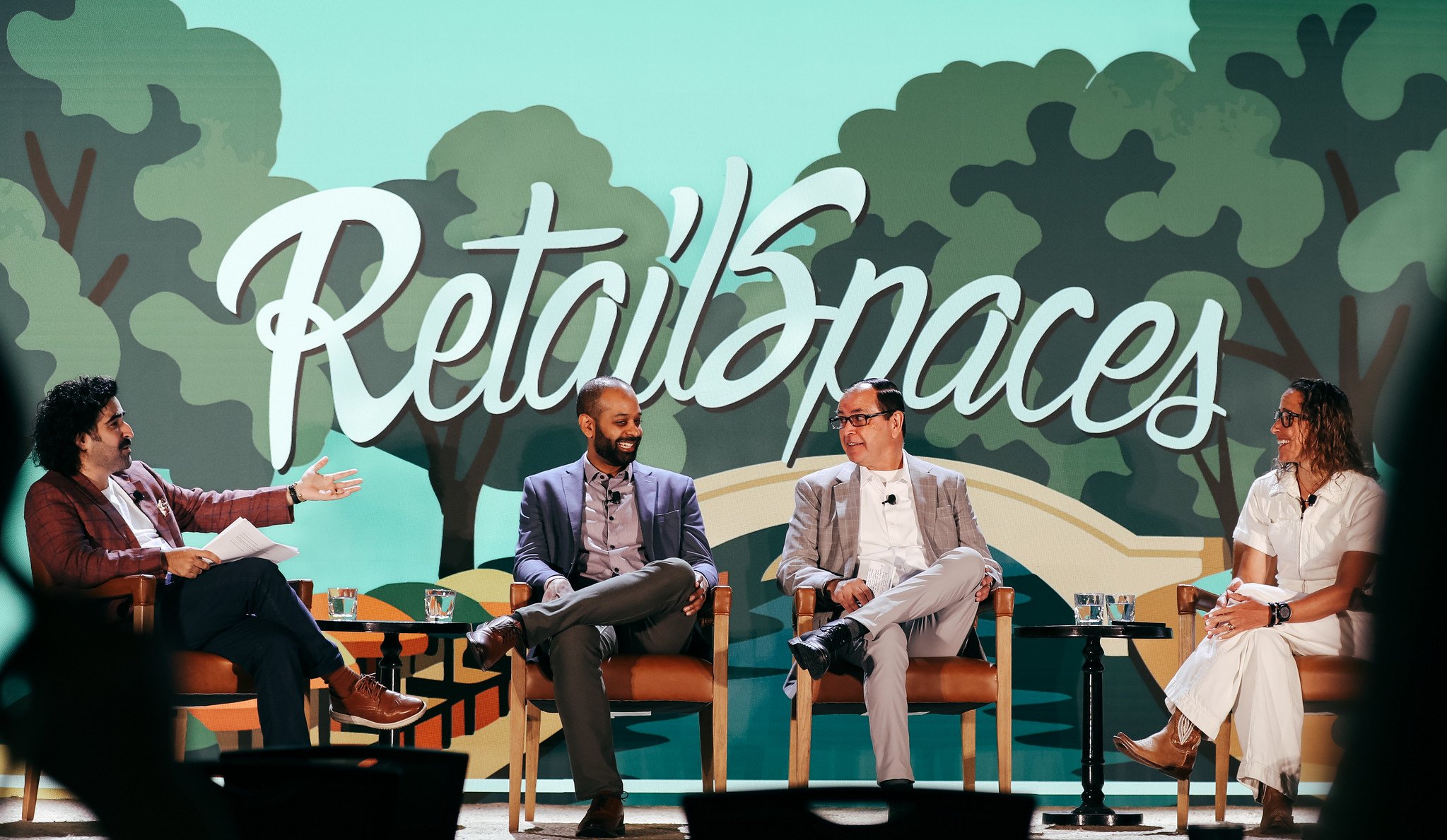
Joel Quill has been at PacSun for 16 years. In that time, the brand has gone from dark, yellow-tinted stores that were hard to shop to one of the most culturally connected retailers in the teen and young adult space. At RetailSpaces Spring 2026, he sat down with Melissa Gonzalez, Principal at MG2, to talk about what it takes to serve a customer who often knows exactly what they want before they walk through the door.
Trends Move in Days, Not Weeks
PacSun’s Casey low-rise baggy jean went viral. Customers showed up to stores wanting it immediately. That scenario, a trend exploding online and turning into foot traffic within hours, is no longer the exception. It's the operating reality.
“Trends move in days, not weeks necessarily,” Quill said. “Sometimes we have to change on a Friday, and just be prepared and ready for it as trends change.”
Coordinating that kind of speed across 300 locations is not a phone call. PacSun runs all store communication through Retail ZipLine, a platform that lets HQ push notifications instantly, pull photos from any store at any moment, and collect feedback from the floor in real time. “I’m able to view any photo of any store at any given moment to make sure it’s translating the right way,” Quill said. “If there’s something that’s not, we can look into it and decide: was our communication right? Did we teach them how to do that the appropriate way?”
The Store Has to Be Built to Change
Speed is not just an operational challenge. It’s a design requirement. PacSun’s newer stores are built to flex, not just look good at opening. Fixtures are lighter, modular, and easier to move. Merchandising can shift without a full overnight teardown. The store updates at least weekly, sometimes daily.
“As we design these new spaces, they’re bright, you can really see the product,” Quill said. “But there’s also the ability to adapt operationally, versus where in the past it might take an overnight or multiple days to change a store experience.”
That flexibility also solves another challenge. Not every PacSun store has been renovated yet. The brand story has to read the same whether you’re in a shiny new store or one that still has the old fixtures. “The product itself, like The Met or other partnerships, still shows up,” Quill said. “That’s the highlight and the most important part of it.”
Your Best Customer Intelligence Is Already in the Store
PacSun treats its store associates as its closest proxy to the customer. “They’re the best of our customers,” Quill said. “They understand our customers, and they’re one of them for sure.”
Beyond sales reports, the brand uses associates to collect the kind of qualitative signals that a spreadsheet cannot catch. What bags are people walking in with? What shoes are they wearing? Is athleisure still driving the floor or has denim come back? That ground-level feedback flows from coast to coast, giving HQ a real-time read on what’s shifting and where.
PacSun also created a Youth Council, a group of Gen Z customers the brand regularly brings into its headquarters to provide direct feedback on products, merchandising, marketing, the website, and the overall brand experience. “They tell us what we need to build as a brand to do better,” Quill said. “They’re very open and honest. That’s the surprising piece, just how willing they are to really engage.”
Culture Is Not a Campaign. It’s an Operating Model.
Formula 1. The Met. The Grammys. The LA Rams. PacSun’s cultural partnerships are not one-off activations. They’ve become core to how the brand shows up in stores year-round, organized around four pillars: music, sport, fashion, and art.
The challenge is making sure those cultural moments translate from a Dubai launch or a trackside event into 300 store floors. “Portraying that in stores has been the task,” Quill said. The answer isn't a big rollout or a special window installation. It’s merchandising clarity: pull the relevant product forward, outfit the look, make the connection clear to a customer who walks in already knowing what they saw online.
Purpose works the same way. Through its Delivering Good partnership, store managers in select cities choose their own local donation recipients, write the letters, and deliver the goods themselves. Community does not have to be a headquarters initiative to feel real in a store.
Tell the Why and the Floor Will Follow
Running a fast-moving brand across operations, merchandising, marketing, design, construction, and loss prevention requires constant communication. But according to Quill, the most important part isn't telling stores what changed. It's explaining why.
“Why are we making them move this denim again to another spot in the store?” Store teams ask that question every time something changes. The answer, when it actually gets communicated, is what turns an instruction into buy-in. “When you can teach the full story and it’s not all a secret, it really helps them get bought into the full culture,” Quill said. “They feel a part of it.”
For a brand whose whole identity is built around a generation that expects to be co-creators, not just consumers, that is not a management philosophy. It's how the brand operates.
Watch the full talk below...

Posted by
Reimagining Physical Retail.
RetailSpaces is a community store development and design innovators.
March 7-9, 2027 | Carlsbad, CA
Learn More!
-2.png)



Comments