
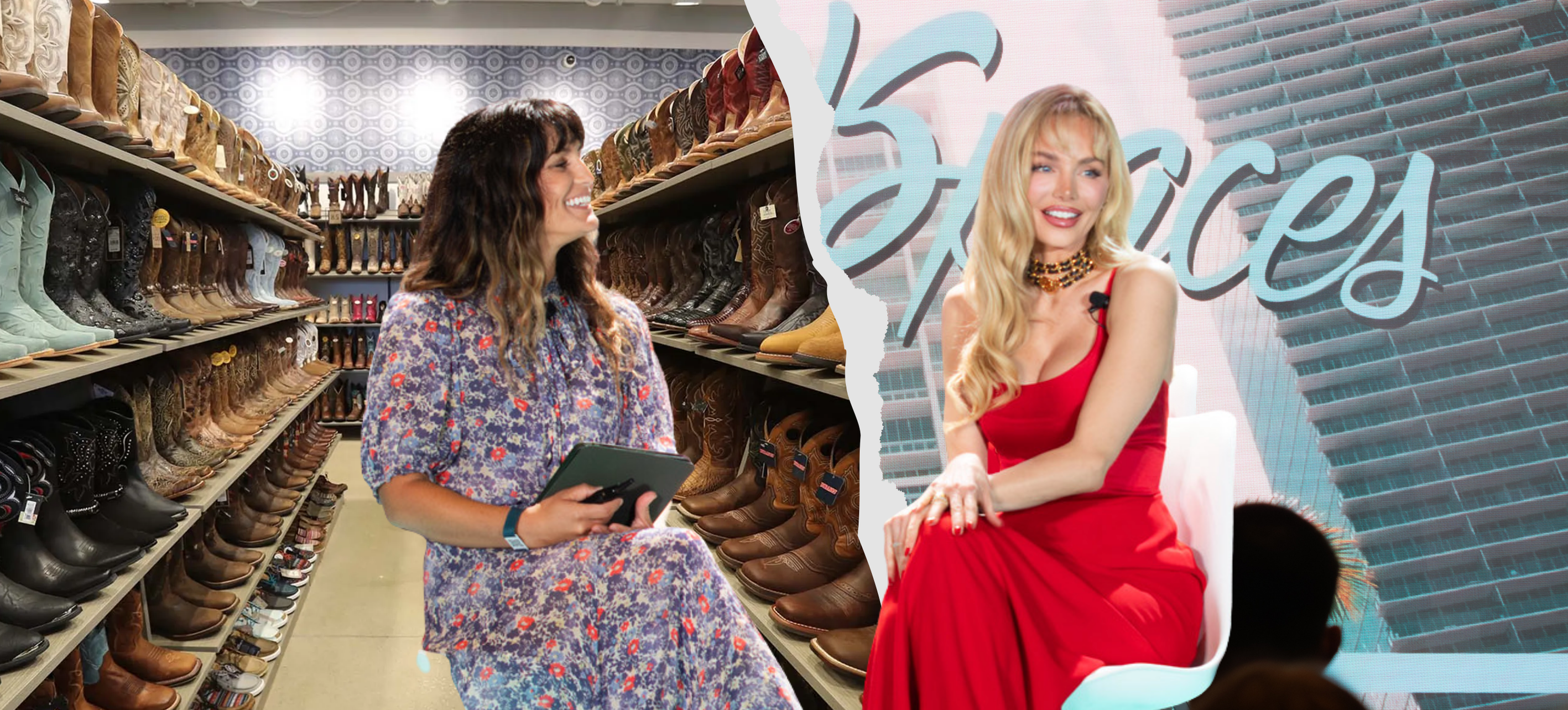
When Isha Nicole joined Boot Barn in December 2016, the company was doing $650 million in revenue. Nine years later: $2.2 billion.
That's 225% growth in an industry where 40-75% is considered strong. At RetailSpaces, Boot Barn's Creative Director sat down with Jaime Holm of Tinker Tin to unpack how they did it, and why the answer has nothing to do with selling boots.
Sell Ideology, Not Product
"Our vision statement at Boot Barn is to offer a piece of American spirit one handshake at a time," Nicole explained. "When a customer picks up a cowboy boot, what that boot symbolically represents is something so much larger than a shoe. It's an American icon."
She pointed to brands that do this well: Nike sells motivation. Tiffany sells elegance. Boot Barn sells the American spirit.
"We're talking about our customer who feeds, builds, and protects America," Nicole said. "That needs to come through with all of the choices that we make."
Know Your Customer—Really Know Them
Before Nicole was hired to rebrand Boot Barn, she spent years traveling the country selling cowboy boots in stores. That ground-level experience became the foundation of everything.
"When you have a really intimate understanding of your consumer and their needs, it helps curate the choices that you're making," she said. "I'm sitting in people's homes at their dinner table, learning about their families, spending the day documenting their lives."
Holm pressed the point: "How many people struggling with their brand have actually left the office and become the customer? Not just use data, but actually walk the streets of who their customer is?"
It's the Jeff Bezos approach: leave an empty chair in every meeting for the most important person in the room—the customer.
Customer Segmentation That Actually Works
In 2018, Boot Barn started segmenting customers based on purchase history, putting them into buckets: Western, Fashion, Work, or a combination. Then they only sent that customer relevant marketing.
This allowed Boot Barn to build subbrands while protecting the core:
- Boot Barn Work serves oil, gas, construction, and agriculture customers.
- Just Country targets the country lifestyle customer, turkey hunting instead of calving season, tailgating instead of rodeos. They wear cowboy boots every day but aren't on a horse.
- Wonder West merges runway trends with western fashion.
"We were able to authentically continue to build the Boot Barn brand as something that honors the iconic American cowboy while also creating these subbrands," Nicole explained.
The result: Boot Barn now operates in 48 states, entering markets they never thought had western communities.
Art Over Mediocrity
Nicole shared advice from a college art professor: "You want people to either hate your work or love your work, but anything in between was failure."
"I'd rather have someone hate a campaign than have it be forgettable," she said. "As we all know, everything kind of looks the same, feels the same, and it's all forgettable."
It's why Boot Barn's campaigns feel different. Whether it's partnerships with Miranda Lambert, Riley Green, and Jelly Roll, or life-size installations at events, they lead boldly.
Scrappy Wins Over Fluff
Boot Barn does all creative in-house. All media buying in-house. They surround themselves with "yes people"—not people who say yes to everything, but people who solve for yes.
"Surround yourself with like-minded people who are highly talented but don't come with a lot of fluff," Nicole said. "It allows us to move quickly and in a cost-effective way."
She quoted her mentor: "If you want to go fast, go alone. But if you want to go far, go as a team."
Stores Come First
Boot Barn treats e-commerce as their largest store, not a separate channel. Marketing communication consistently drives customers to physical stores, with e-commerce playing a supporting role.
They hit customers with newness constantly—a campaign a week across Boot Barn, Boot Barn Work, Just Country, Wonder West, plus 13 private label lines.
"We have a stores-first mindset," Nicole said.
The Takeaway
Boot Barn didn't grow 225% by selling more boots. They grew by understanding exactly who their customer is, what they value, and building every decision around that American spirit.
They segment ruthlessly. They lead boldly. They stay scrappy. And they never forget that the most important person in the room is the one wearing the boots—not the one selling them.

Posted by
Reimagining Physical Retail.
RetailSpaces is a community store development and design innovators.
March 7-9, 2027 | Carlsbad, CA
Learn More!
-2.png)
-3.png)


Comments